

Household LPG in Cameroon: why connect the cylinder
In September 2026, households in Yaoundé and Douala went from one sales point to the next looking for cooking gas. Demand is rising, local output has dropped and Cameroon imports most of its LPG. A connected cylinder does not create gas, but it tells everyone how much is left: MyGaz, in Yaoundé, makes that level visible to the household, the delivery agency and the industry before the cylinder runs dry.
What happened in September 2026?
In mid-September 2026, residents of Yaoundé went round the sales points without finding a full cylinder. According to Deutsche Welle, carried by allAfrica on 17 September 2026, nearly 133,000 tonnes of bottled cooking gas were sold in Cameroon between January and July 2026, against just over 125,000 tonnes over the same months of 2025. Some went back to charcoal (EcoMatin, 16 September 2026).
In a statement dated 17 September 2026, the Cameroon Petroleum Depots Company (SCDP) described a localised strain, centred on one marketer, rather than a general shortage. It listed national consumption up by about 15%, the halt of gas production at Bipaga, near Kribi, which removes about 2,000 tonnes a month from national supply, tankers arriving late at the port of Douala, and speculative behaviour.
On 23 September, Water and Energy Minister Gaston Eloundou Essomba signed a circular (Business in Cameroon, 24 September 2026). It points to importers being paid late, market shares not being respected and subsidised household gas being resold to industry, and it requires licensed distributors to hold a fleet of at least 10,000 cylinders. On 30 September, he set a supply target of 200 tonnes a day for Yaoundé and 220 tonnes for Douala (Business in Cameroon, 30 September 2026).
Where does Cameroon's household gas come from?
Cameroon imports most of its liquefied petroleum gas (LPG): 150,420 tonnes of liquefied butane in 2025, while the Bipaga processing plant is expected to produce about 30,000 tonnes a year (Business in Cameroon, 1 September 2026). To cover 2026, the Hydrocarbons Prices Stabilisation Fund (CSPH) launched a tender for 60,000 tonnes.
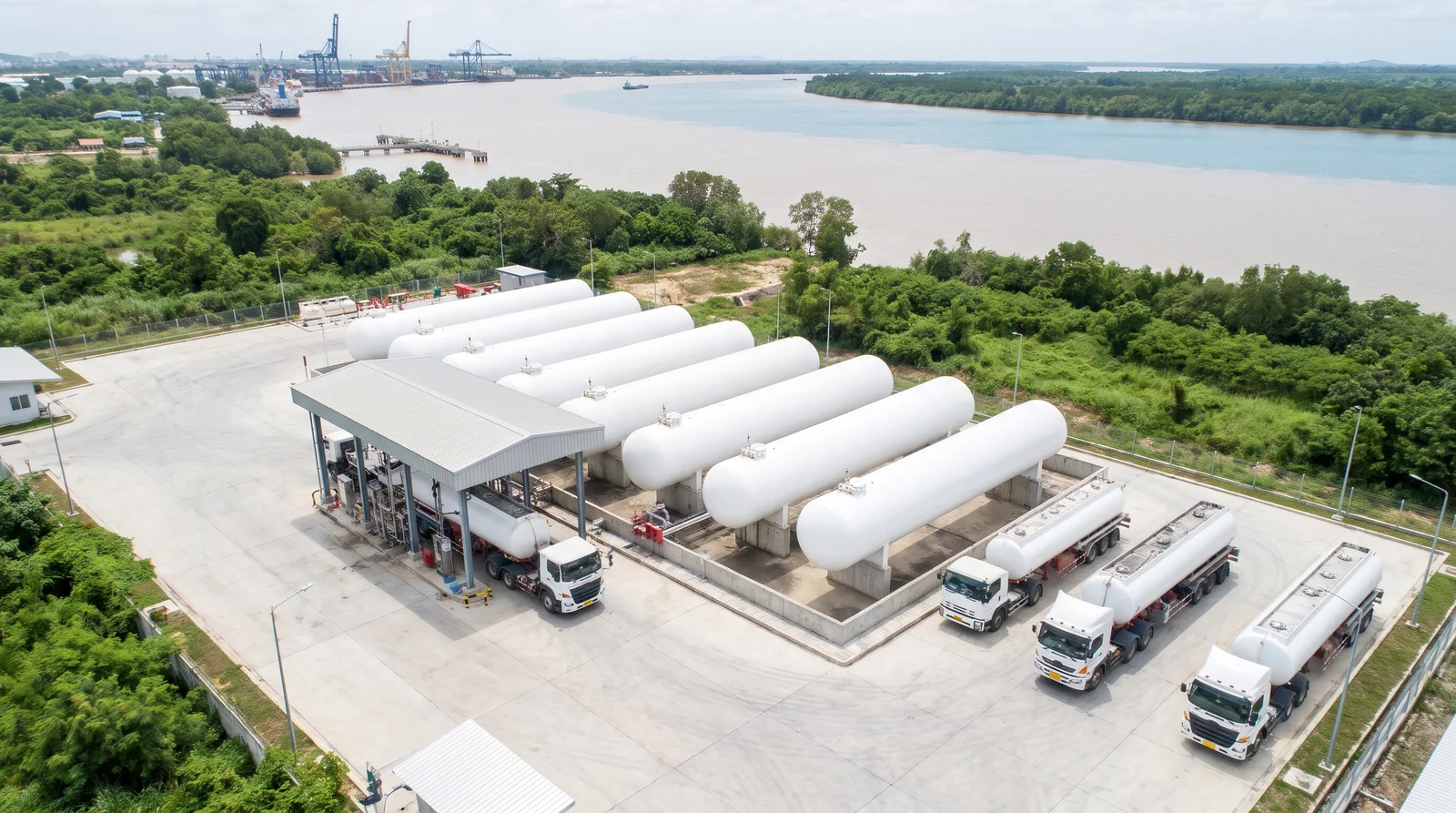
The gas is then stored and bottled, notably at SCDP's depot in Bonabéri, Douala. Marketers, including Tradex, SCTM, TotalEnergies and OLA Energy (EcoMatin), sell their cylinders to distributors, who supply neighbourhood depots, sales points and delivery agencies. The cylinder belongs to the marketer and passes from one customer to the next at each exchange: the recirculation model described by Bruce et al. (Energy for Sustainable Development, 2018).
The national LPG Master Plan, approved in September 2016, aims for a cylinder available within five minutes' walk of the home (Bruce et al., 2018), and CSPH has added regional filling plants, the latest launched in Kumba in April 2025 (Financial Afrik, 6 May 2025).
What about the rest of Africa?
Cameroon is not an isolated case. According to Clean Cooking in Africa 2026, published on 9 July 2026 by the International Energy Agency (IEA), nearly 2 billion people worldwide still cook with fuels that produce harmful smoke, half of them in sub-Saharan Africa. LPG accounts for more than 70% of the people with clean cooking access in Africa and the vast majority of new connections in 2024 (executive summary).
In Nigeria, the regulator NMDPRA presented a shortfall at the end of June 2026: 565,106 tonnes supplied to the local market between January and 18 June, against a requirement of 657,072 tonnes, while part of output was exported (MMS Plus, 29 June 2026). In Kenya, LPG consumption reached 475,943 tonnes in 2025, up 14.7% (The Star, 1 April 2026).
In Côte d'Ivoire, the General Directorate of Hydrocarbons seized 2,140 small butane cylinders linked to clandestine refilling in Yamoussoukro at the end of January 2026, a source of explosion and fire risk (Fraternité Matin via allAfrica, 2 February 2026). Everywhere, demand is growing faster than the infrastructure, and the cylinder stays invisible between two refills.
Where does a connected cylinder help?
A connected cylinder does not produce gas. It adds the information every link is missing: how much is left, and roughly when the cylinder will be empty.
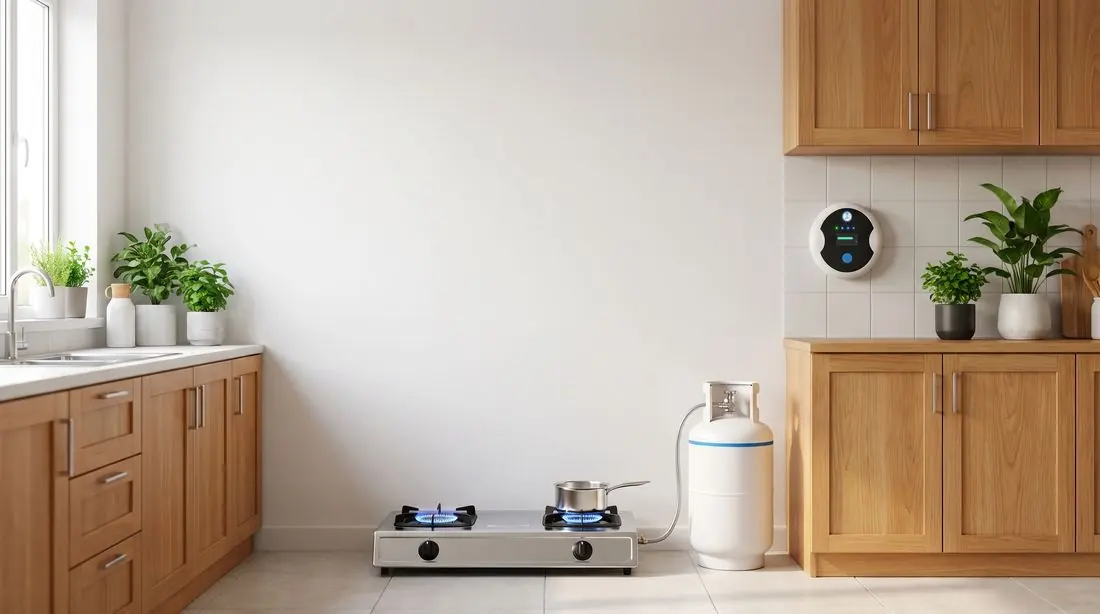
For the household, it means fewer surprise run-outs. With MyGaz, the UltraSense sensor estimates the level from under the cylinder, the UConnect box sends it over the mobile network, and the MyGaz app shows the level and the estimated days left. The household orders before running dry, which buys time when supply is tight.
For the delivery agency, demand becomes visible before the phone rings. It can group its trips by neighbourhood instead of answering one call at a time.
For distributors and marketers, who own the cylinders, the data shows the real rotation of the fleet and the neighbourhoods where demand is rising, which helps allocate deliveries when gas is short. The MyGaz web console is built for them.
One important point: MyGaz measures the gas level, not leaks. Safety rests on compliant cylinders, licensed filling plants and good habits at home, set out on our gas safety page.
Where is MyGaz today?
MYGAZ SAS is a Cameroonian company based in Yaoundé. Born in 2015 at the University of Buea and incorporated in 2021, it adopted ultrasound measurement in 2022. A pilot network is starting in Yaoundé, with delivery agencies as the first link. The sensor and the box are explained on the Technology page, and industry players who want to take part can write to us from the Contact page.
Sources
Deutsche Welle via allAfrica, cooking gas out of stock in Yaoundé (in French), 17 September 2026.
SCDP, “Gaz domestique : une tension localisée, pas une pénurie” (in French), 17 September 2026.
EcoMatin, cooking gas shortage persists in Douala and Yaoundé (in French), 16 September 2026.
Business in Cameroon, “Cameroon Imposes New Cooking Gas Supply Rules Amid Shortages”, 24 September 2026.
Business in Cameroon, “Cooking Gas Shortage: Cameroon Sets 200-Ton Daily Supply Target for Yaounde”, 30 September 2026.
Business in Cameroon, “Cameroon Seeks 60,000 Tons of Cooking Gas to Cover 2026 Demand”, 1 September 2026.
Financial Afrik, CSPH filling plant in Kumba (in French), 6 May 2025.
International Energy Agency, Clean Cooking in Africa 2026, 9 July 2026.
MMS Plus, LPG supply deficit presented by NMDPRA, 29 June 2026.
The Star, Kenya's LPG consumption in 2025, 1 April 2026.
Fraternité Matin via allAfrica, butane cylinders seized in Yamoussoukro (in French), 2 February 2026.
Read next
All news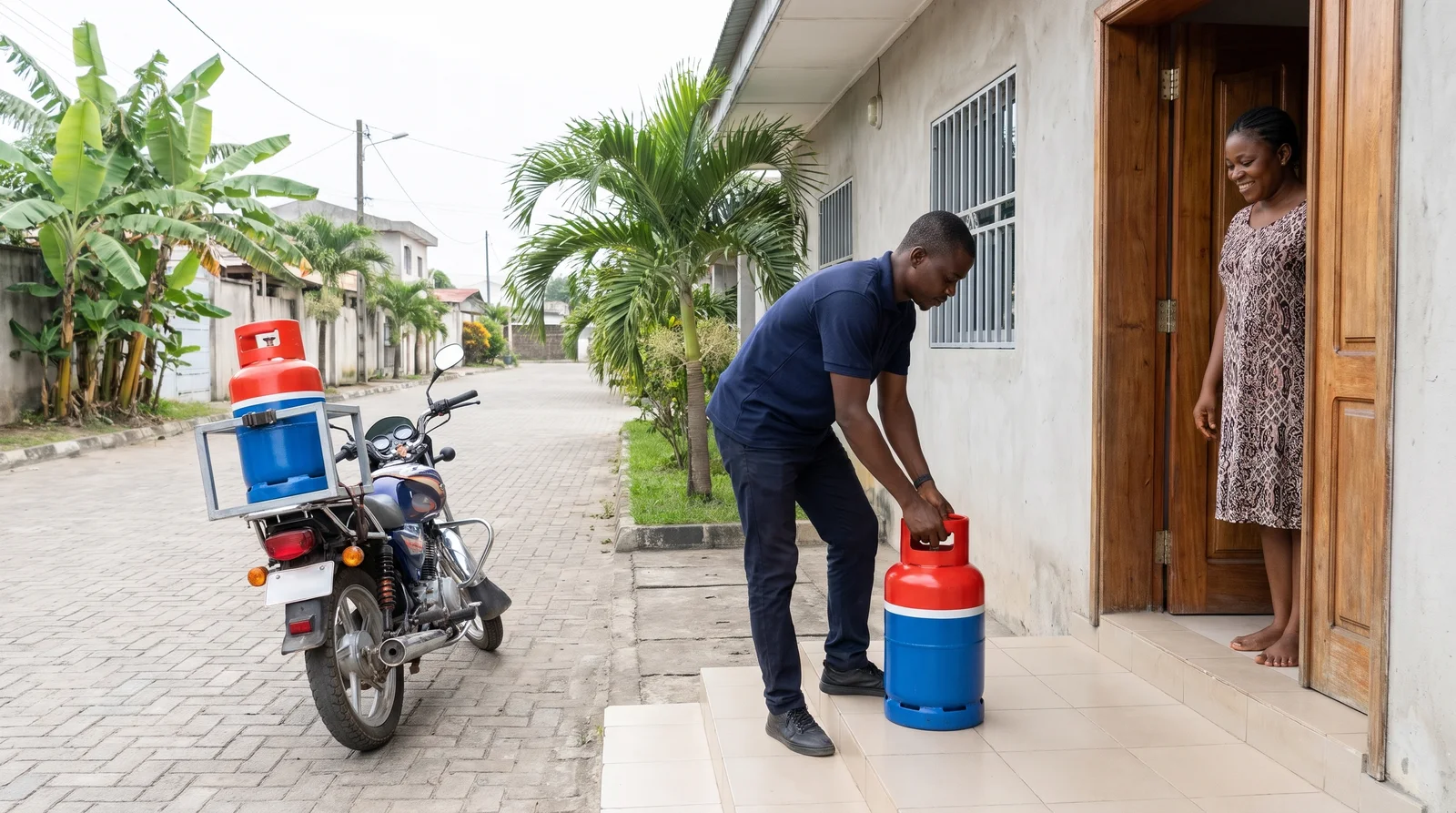 “Subsidise access, not consumption”: what Nigeria says about the refillAt the 16th NLCGA conference, in Abuja on 4 and 5 November 2026, Audrey Joe-Ezigbo (Falcon Corporation) proposed subsidising access to gas rather than its consumption, and judging every programme by one measure: does the household that was helped still refill its cylinder, on its own, 24 to 36 months after support ends. On 21 November, Anthony Agbo (Unigas) pointed out that 96% of Nigeria's LPG receipts in September came from domestic producers, with stock cover of 15.9 days against a 30-day minimum. In Cameroon, the press disagrees on the Bamenda gas filling centre, inaugurated on 9 May 2025. Everywhere, the missing figure is the refill at household level.
 Bipaga at 200 tonnes, Bonabéri in thirty months: Cameroon's household gas between two supply chainsThe Bipaga plant, Cameroon's only local source of household gas, produced 200 tonnes of LPG in October 2026 according to data provided to Investir au Cameroun, against an average of 1,800 tonnes a month from May to September. On 11 November, SCDP held the kick-off meeting for the Bonabéri LPG hub, due to be operational in a little under thirty months, and on 12 November it called the foundation stone of the Kribi terminal imminent. Until then, the gas in Cameroon's kitchens arrives almost entirely by ship and goes through today's depots.