

“Subsidise access, not consumption”: what Nigeria says about the refill
At the 16th NLCGA conference, in Abuja on 4 and 5 November 2026, Audrey Joe-Ezigbo (Falcon Corporation) proposed subsidising access to gas rather than its consumption, and judging every programme by one measure: does the household that was helped still refill its cylinder, on its own, 24 to 36 months after support ends. On 21 November, Anthony Agbo (Unigas) pointed out that 96% of Nigeria's LPG receipts in September came from domestic producers, with stock cover of 15.9 days against a 30-day minimum. In Cameroon, the press disagrees on the Bamenda gas filling centre, inaugurated on 9 May 2025. Everywhere, the missing figure is the refill at household level.
What did Audrey Joe-Ezigbo propose in Abuja?
She proposed subsidising access to gas rather than its consumption, and judging programmes by household refills. At the 16th conference of the Nigeria Liquefied and Compressed Gases Association (NLCGA), held on 4 and 5 November 2026 at PTDF Towers in Abuja, Falcon Corporation's chief executive summed up her position in one sentence: “We should subsidise access, not consumption” (Leadership, 17 November 2026).
In her view, public money should fund what lowers delivery costs: inland depots, bottling plants, better logistics. Subsidising the molecule itself, she said, discourages the investment needed to expand LPG use. In the North, the paper notes, transport weighs heavily in what households pay for their gas.
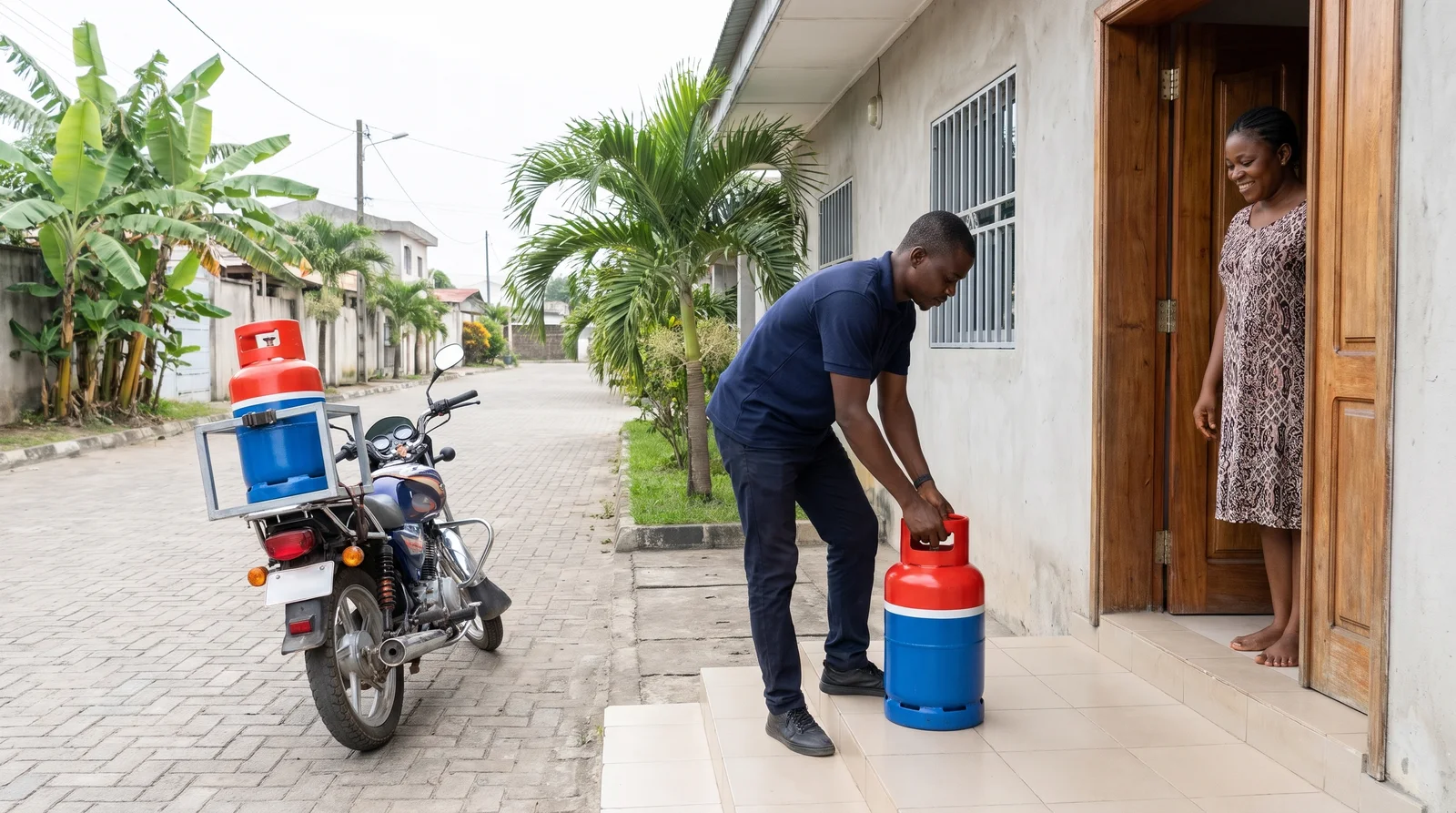
Her most concrete proposal concerns measurement. A programme has succeeded, she said, if the households it reached can still refill their cylinders independently, at prevailing market prices, 24 to 36 months after support ends. She recommended tracking refills per household and programme, with quarterly publication of the data, linking companies' offtake contracts to verified refills, and bringing demand, supply, refills, storage and lives saved together in a shared data platform and a public scorecard.
Why is Nigeria short of LPG when it produces its own?
Because consumption exceeds receipts and stock does not keep up: in September 2026, the country had only 15.9 days of cover. On 21 November, in The Guardian Nigeria, Anthony Agbo, chief executive of Unigas Global Energy, set out the regulator NMDPRA's figures for September. Consumption reached 5.2 kilotonnes a day, 33% above the regulator's benchmark. Receipts were only 4.7 kilotonnes a day. Stock cover fell to 15.9 days, against a 30-day safety minimum. The NMDPRA had published them in its monthly factsheet, reported by Leadership via allAfrica on 26 October 2026.
The paradox lies in where the gas comes from: 96% of September's receipts came from domestic producers. Nigeria is not short of gas, it is short of storage, logistics and buffer stock. Anthony Agbo argues that a single refinery shutdown should not trigger a national price shock. His answer comes in three steps: guarantee domestic volumes and a 30-day buffer stock, accelerate the midstream (the OB3 and AKK pipelines, storage, distribution), then open refining to private capital. Cameroon too depends on its depots and cargoes to hold its stocks (see our article on storage and logistics).
Is the Bamenda gas filling centre running?
The sources disagree, and either way nothing tells households in the North-West when gas will be there. According to Cameroun Actuel (19 November), in French, the Bamenda gas filling centre, inaugurated on 9 May 2025, is idle; yet Cameroon Tribune had reported it commissioned on 12 December 2025 (15 December 2025 and 22 December 2025).
The centre was inaugurated by the Minister of Water and Energy, Gaston Eloundou Essomba. CSPH is the project owner, and SCDP supplies it. The minister said that day: “From now on, people will have access to household gas without bearing the extra cost of transport from Bafoussam” (KOACI, 10 May 2025, in French).
Cameroun Actuel adds that households pay for their refill above the approved tariff, depending on availability and place. Whichever version is right, the North-West household finds out at the point of sale: nothing tells it in advance when gas will be available near home.
Why count refills rather than tonnes?
Because only the refill says whether a family still cooks with gas. A plant inaugurated, a terminal launched, a cargo unloaded are counted in tonnes and capacities. The Abuja proposal moves the meter into the kitchen: the programme has succeeded if the cylinder is refilled, again and again, after the support ends.
It echoes what Tanzania's president said at COP31 on 12 November, according to the IEA: success is measured by the number of families served, not only by the resources mobilised (see our article on clean cooking at COP31). Counting refills per household means knowing what happens between two cylinders. Tonnes landed in Douala do not say, and the point of sale sees the cylinder go by, not the household.
That is the information MyGaz produces. The UltraSense sensor estimates the gas level from under the cylinder, the UConnect box sends the reading over the mobile network, and the MyGaz app shows the household the level and an estimate of the days left, so the refill is ordered before running dry. Delivery agencies and their riders see the need coming in MyGaz Pro, and the web console gives the distributor a view of consumption, neighbourhood by neighbourhood, refill after refill. At the scale of the Yaoundé pilot network, it is the refill counter Audrey Joe-Ezigbo is asking for at the scale of a country. MyGaz measures the gas level, not leaks: safety rests on compliant cylinders, licensed filling plants and the good habits set out on our gas safety page.
What does the refill ask of each link in Cameroon?
At every link, it asks for knowing sooner where gas will be needed. At the depot, cargoes on time and a buffer stock that holds: Nigeria shows what sixteen days of cover weigh. At the filling centre, a start-up that shows in kitchens, not only on inauguration day. At the distributor, cylinders that go where they are expected, and a sense of how fast each neighbourhood empties them. At the delivery agency, a delivery before the stove goes out, not after the phone call. At the household, no longer waiting for the empty cylinder before looking for the next one.
What to watch
ARDA's third LPG Forum opens on 24 November in Dar es Salaam (ARDA events calendar); according to its executive secretary, the World Liquid Gas Association is co-hosting it (column of 30 October 2026; see our article on the last mile). In Bamenda, a word from CSPH or SCDP on the actual state of the filling centre. In Nigeria, NMDPRA stock figures for October. In Yaoundé, the pilot network continues with delivery agencies; interested distributors can write to the team from the Contact page.
Sources
Leadership, “Falcon Corporation Advocates Infrastructure-Focused Subsidies To Expand Grassroots LPG Access”, 17 November 2026.
The Guardian Nigeria, “Nigeria's Cooking Gas Crisis: Supply bottlenecks threaten decade of progress”, 21 November 2026.
Leadership via allAfrica, “Nigeria: 7-Month Petrol Stock Shortfall Sparks Year-End Supply Concern” (NMDPRA monthly factsheet, September 2026), 26 October 2026.
Cameroun Actuel, “Cameroun/Nord-Ouest : l'usine de gaz de Bamenda toujours à l'arrêt un an après son inauguration” (in French), 19 November 2026.
KOACI, “Cameroun : Bamenda, le gouvernement inaugure un centre emplisseur de gaz domestique catalyseur de paix et de développement” (in French), 10 May 2025.
Cameroon Tribune, “Domestic Gas: Filling, Marketing Begins In Bamenda”, 15 December 2025.
Cameroon Tribune, “Bamenda Gas Filling Centre: Maximising The Huge Investment”, 22 December 2025.
IEA, “Leaders at COP31 seek to accelerate clean cooking progress in Africa ahead of Nairobi Summit”, 12 November 2026.
ARDA, events calendar, consulted 23 November 2026.
allAfrica, “Who Dares Wins: LPG, the Next Frontier for Africa's Downstream”, guest column by Anibor O. Kragha (ARDA), 30 October 2026.
Read next
All news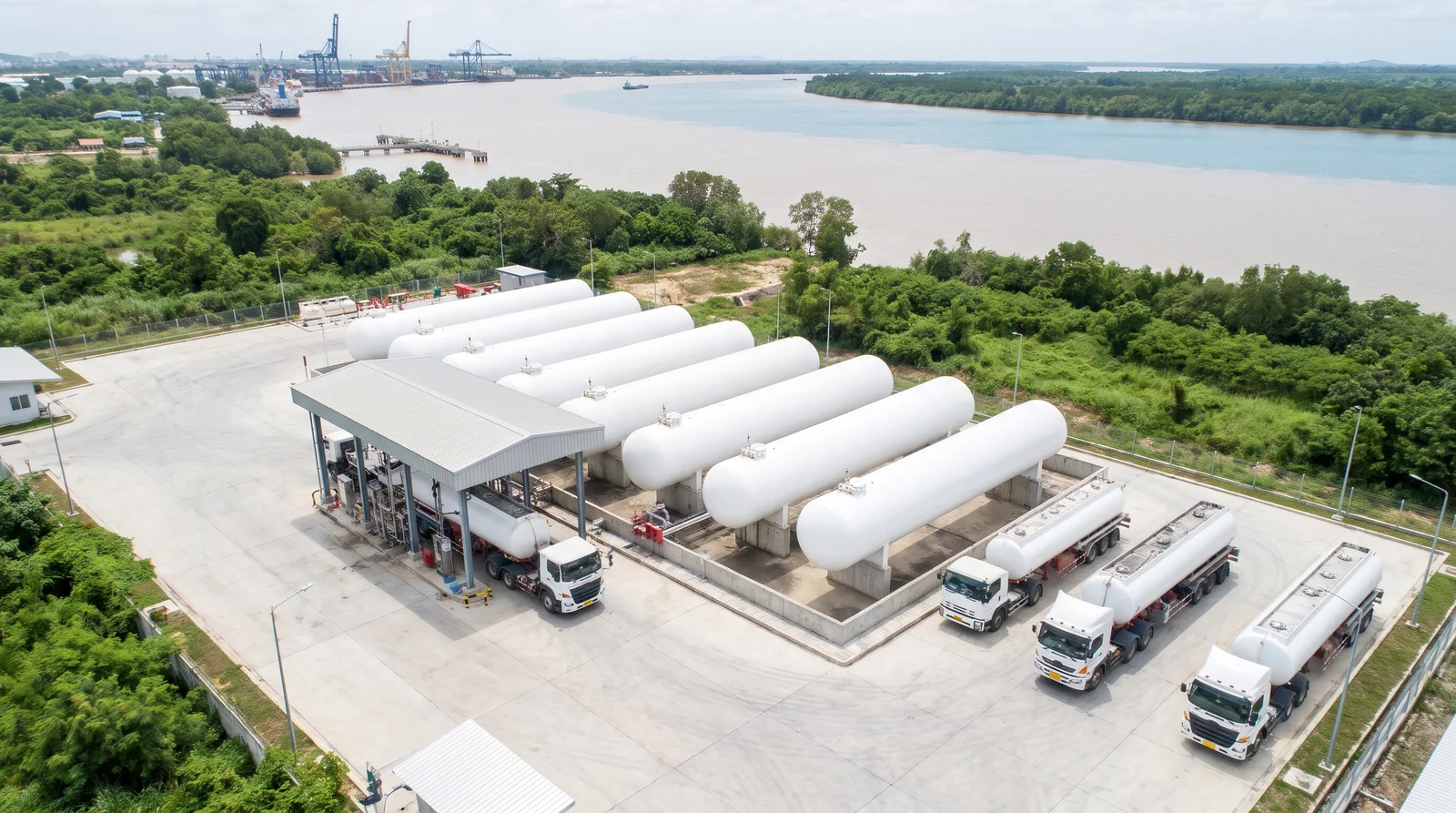 Bipaga at 200 tonnes, Bonabéri in thirty months: Cameroon's household gas between two supply chainsThe Bipaga plant, Cameroon's only local source of household gas, produced 200 tonnes of LPG in October 2026 according to data provided to Investir au Cameroun, against an average of 1,800 tonnes a month from May to September. On 11 November, SCDP held the kick-off meeting for the Bonabéri LPG hub, due to be operational in a little under thirty months, and on 12 November it called the foundation stone of the Kribi terminal imminent. Until then, the gas in Cameroon's kitchens arrives almost entirely by ship and goes through today's depots.
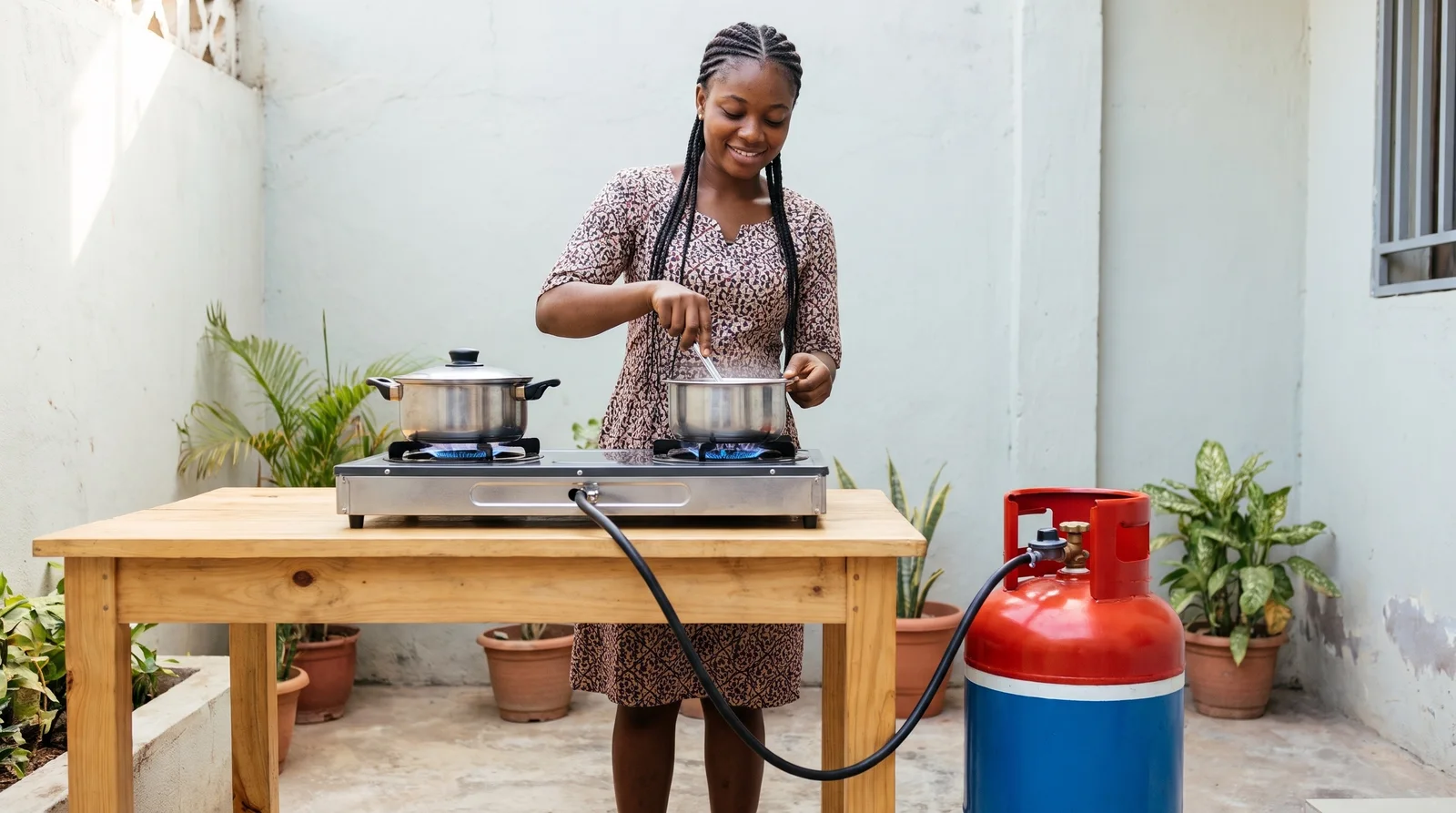 Clean cooking changes address: the Clean Cooking Alliance joins the IEA and LPG goes to COP31Since 2 November 2026, the Clean Cooking Alliance has been an initiative hosted by the International Energy Agency, with a secretariat in Paris. The same day, the global LPG association asked COP31 in Antalya to recognise cooking gas in climate policy, and Nigeria was due to present its national cylinder registry there on 12 November. The conference closed on 22 November without an overall agreement, and the clean cooking track continues at the Nairobi summit on 27 and 28 January 2027. Clean cooking is entering energy policy, and its new interlocutors ask for data.