

Household LPG: after the strain, Cameroon turns to storage and logistics
After the sharp strain on household gas in Yaoundé and Douala in September 2026, Cameroon's LPG industry announced measures in October focused on storage and transport: a coordination meeting in Douala on 8 October, then SCDP's depot managers' seminar in Kribi on 13 October, with a hydrocarbons terminal in Kribi and an energy hub in Bonabéri on the horizon. These projects strengthen the upstream part of the chain. The last link, the cylinder in the kitchen, still has to be made visible.
What did the industry agree in Douala on 8 October?
On Thursday 8 October 2026, the Director General of the Cameroon Petroleum Depots Company (SCDP) brought together marketers, transporters and representatives of the Ministry of Water and Energy (MINEE), Customs, Trade, Transport and the Hydrocarbons Prices Stabilisation Fund (CSPH) in Douala, according to Journal du Cameroun (in French).
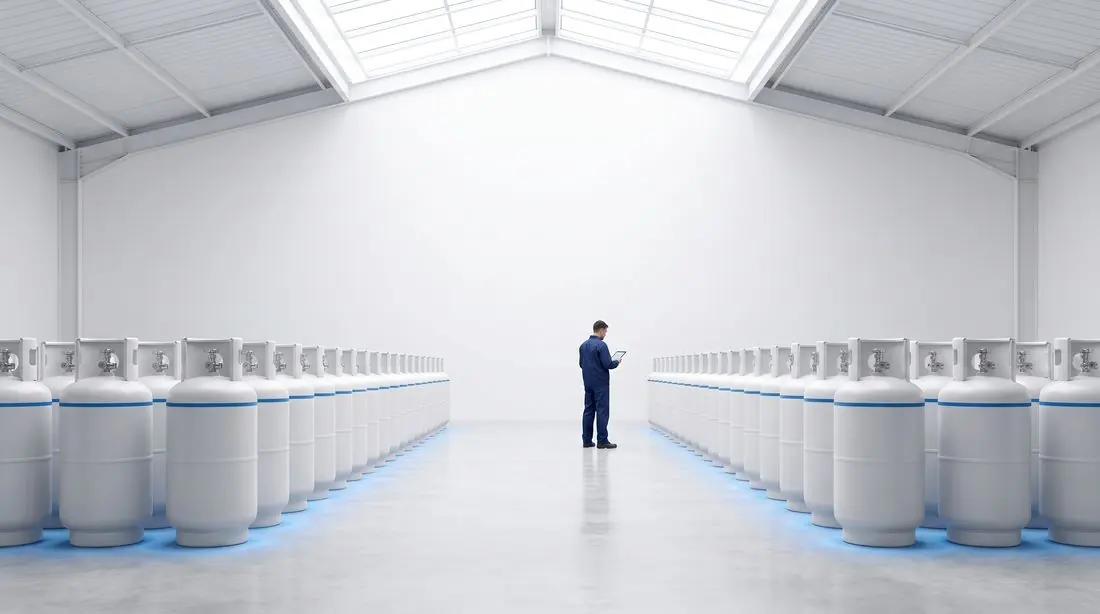
Three workstreams came out of it. Safety first: palletising household gas cylinders will now be preferred. Logistics next: facing growing demand, Tradex and the other marketers called for a denser truck fleet and closer work between SCDP and Camrail. The rail operator announced it is acquiring new locomotives for the Douala-Belabo-Ngaoundéré line. Modernisation last: SCDP plans electronic metering at the Belabo and Garoua filling plants, and a second 24-scale filling carousel at Bonabéri from 2027.
What is SCDP preparing in Kribi?
On Tuesday 13 October 2026, SCDP opened its annual depot managers' seminar in Kribi (SCDP, 13 October 2026, in French). Its Director General, Véronique Moampea Mbio, announced that the company would return to Kribi in the coming days, probably before the end of 2026, to lay the foundation stone of the Kribi Hydrocarbons Terminal. The facility is meant to raise SCDP's storage capacity considerably, across all products.
SCDP does not hide the context. Its Director General referred to “the malfunction that affected our LPG supply chain” and to the strong strain seen in the large cities. She recalled the recent inauguration of sphere 6, the construction of sphere 7 to increase LPG receiving capacity, and the announced start of works on the Bonabéri energy hub.
The priorities set for depot managers are concrete: receiving products and moving them to inland depots, the rotation of rail tank cars, the capacity to meet the expected growth in demand, and better loading operations.
Why is everyone talking about resilience?
Cameroon is not an isolated case. From 12 to 16 October 2026, the World Liquid Gas Association gathered the global LPG industry in Istanbul for Liquid Gas Week, under the theme “Resilience in a Changing World”, with a keynote by Fatih Birol, Executive Director of the International Energy Agency (IEA) (LP Gas Magazine, 12 October 2026; see our article on Liquid Gas Week).
In July, the IEA had already warned about fragile supply. According to Climate Home News (10 July 2026), Fatih Birol said many countries now have less than 15 days of fuel storage, and the agency is developing a clean cooking security programme focused on LPG storage and supply chains. The African Union Commissioner for Infrastructure and Energy, Lerato Mataboge, called for supply chains that are more resilient and closer to the people they serve.
The Douala and Kribi announcements point the same way: more storage, more transport capacity, better-measured operations.
What storage cannot see
Spheres, terminals, rail cars and trucks answer one question: how much gas comes into the country, and how far it travels. They do not say how much is left in each kitchen. Between the filling plant and the home, the cylinder passes through the distributor, the neighbourhood depot or the delivery agency, then sits in the household for several weeks without anyone knowing when it will be empty. Demand only shows up when the cylinder runs dry, often at the same time for many homes.
That is the information MyGaz provides. The UltraSense sensor estimates the gas level from under the cylinder, the UConnect box sends it over the mobile network, and the MyGaz app shows the household the level and the estimated days left. The household orders before running dry. The delivery agency sees needs coming before the phone rings, and the web console gives distributors and marketers a view of demand by neighbourhood. When supply is tight, knowing where demand is coming from helps allocate deliveries.
One point to be clear on: MyGaz measures the gas level, not leaks. Safety rests on compliant cylinders, licensed filling plants and good habits at home, set out on our gas safety page.
What to watch
Several steps have been announced: the foundation stone of the Kribi terminal, the start of works on the Bonabéri hub, the commissioning of sphere 7, the arrival of Camrail's locomotives and, for 2027, the second Bonabéri carousel. The MyGaz pilot network is starting in Yaoundé, with delivery agencies as the first link. Industry players who would like to take part can write to the team from the Contact page.
Sources
Journal du Cameroun, “Carburants et gaz : la SCDP et les marketeurs s'accordent pour sécuriser les approvisionnements” (in French), meeting of 8 October 2026.
SCDP, “La SCDP se tourne vers Kribi” (in French), 13 October 2026.
LP Gas Magazine, “Liquid Gas Week 2026 launches in Istanbul”, 12 October 2026.
Climate Home News, “Iran war fuel shocks threaten Africa's clean cooking push, IEA says”, 10 July 2026.
Read next
All news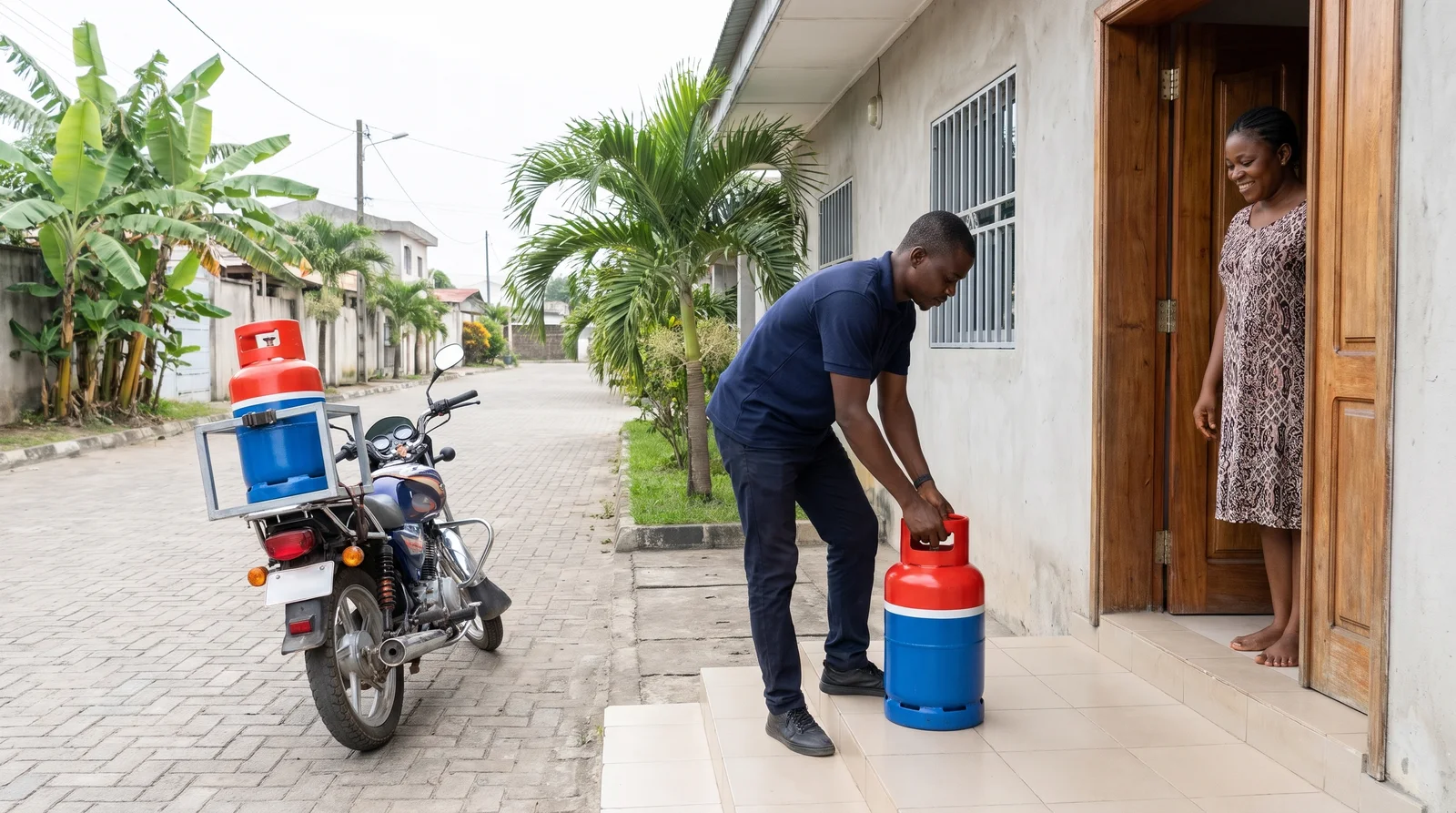 “Subsidise access, not consumption”: what Nigeria says about the refillAt the 16th NLCGA conference, in Abuja on 4 and 5 November 2026, Audrey Joe-Ezigbo (Falcon Corporation) proposed subsidising access to gas rather than its consumption, and judging every programme by one measure: does the household that was helped still refill its cylinder, on its own, 24 to 36 months after support ends. On 21 November, Anthony Agbo (Unigas) pointed out that 96% of Nigeria's LPG receipts in September came from domestic producers, with stock cover of 15.9 days against a 30-day minimum. In Cameroon, the press disagrees on the Bamenda gas filling centre, inaugurated on 9 May 2025. Everywhere, the missing figure is the refill at household level.
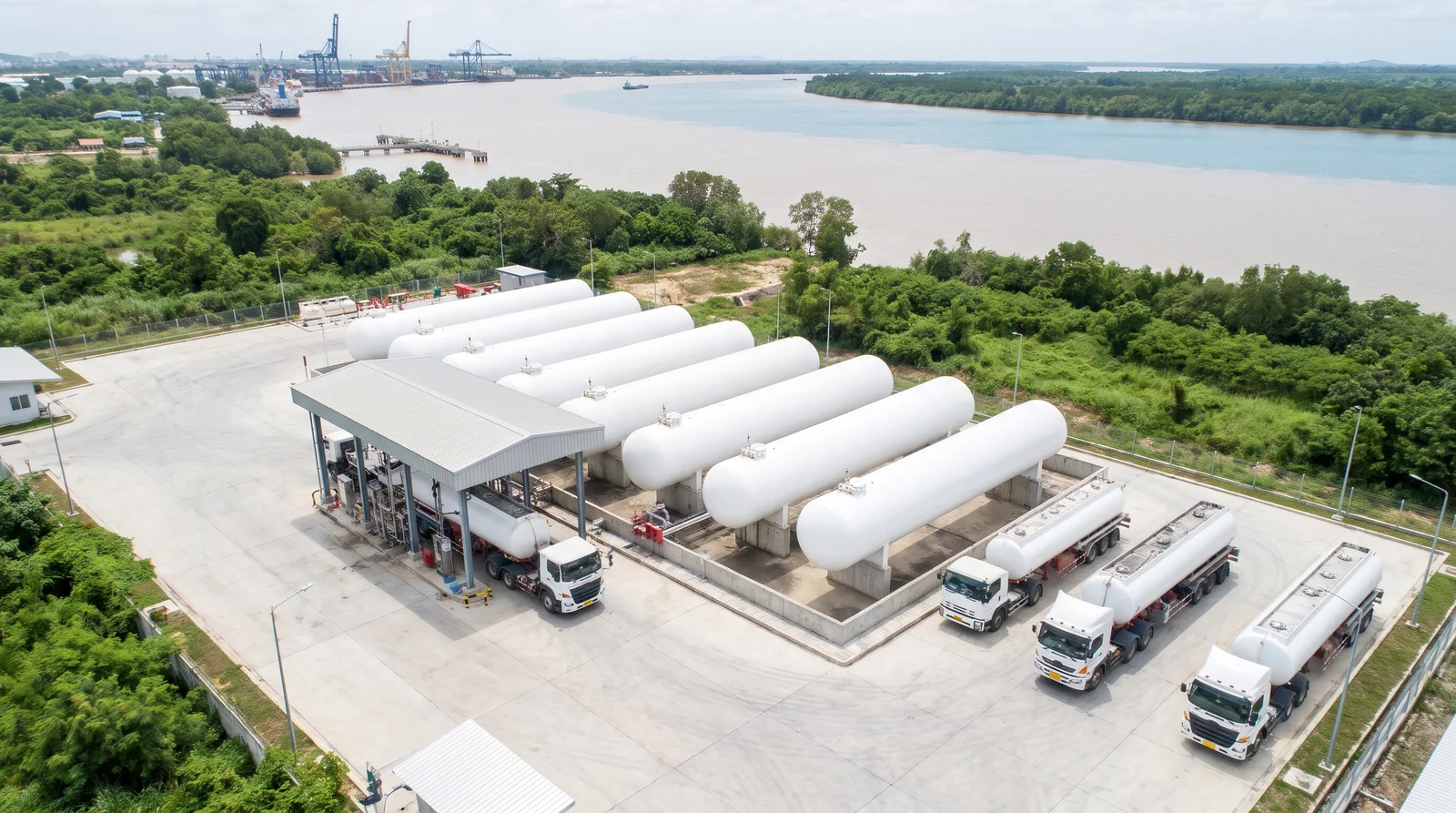 Bipaga at 200 tonnes, Bonabéri in thirty months: Cameroon's household gas between two supply chainsThe Bipaga plant, Cameroon's only local source of household gas, produced 200 tonnes of LPG in October 2026 according to data provided to Investir au Cameroun, against an average of 1,800 tonnes a month from May to September. On 11 November, SCDP held the kick-off meeting for the Bonabéri LPG hub, due to be operational in a little under thirty months, and on 12 November it called the foundation stone of the Kribi terminal imminent. Until then, the gas in Cameroon's kitchens arrives almost entirely by ship and goes through today's depots.