

Delivery agencies, the first link of the MyGaz pilot network
In Cameroon, the gas cylinder reaches the household through a last link that is often poorly equipped: neighbourhood depots, delivery agencies and riders. MyGaz is starting its Yaoundé pilot network with these agencies. With MyGaz Pro, the order arrives with the exact address, the trip is guided, the technician commissions the sensor step by step, and every delivery is recorded.
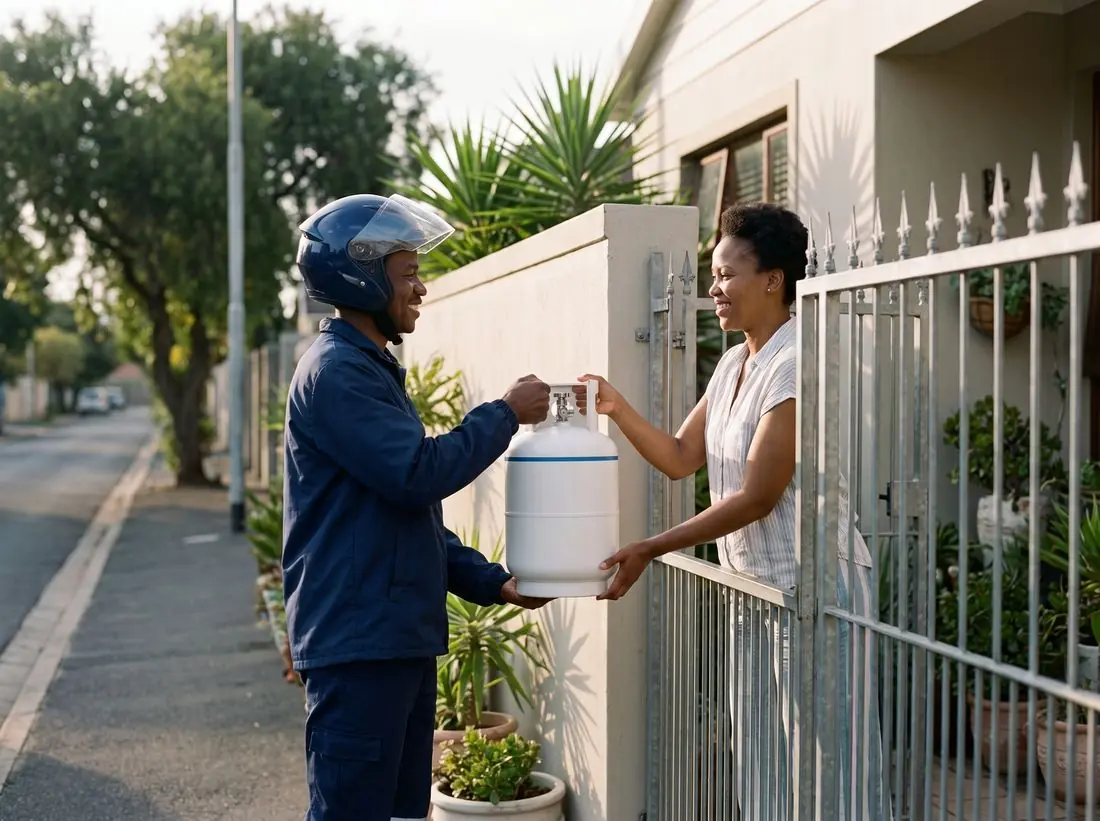
Who delivers gas to households in Cameroon?
Between the filling plant and the kitchen, the cylinder passes through several hands. Marketers fill and own the cylinders, distributors buy and allocate them, and then neighbourhood depots, sales points and delivery agencies carry them to households. The Water and Energy Minister's circular of 23 September 2026 now requires licensed distributors to hold a fleet of at least 10,000 cylinders before collecting gas intended for sales points (Business in Cameroon, 24 September 2026).
The last mile is the hardest. The 2016 LPG Master Plan aimed for at least one sales outlet per 3,000 people and a cylinder available within five minutes' walk. Yet the field study cited by Bruce et al. (2018) found that, in peri-urban and rural communities around Limbe, about a quarter of households cooking only with LPG travelled from 1 to more than 5 kilometres to refill their cylinder. This is where the delivery agency helps: it saves the household that trip.
Why the last mile matters so much
The strain of September 2026 showed it. On 28 September, Minister Gaston Eloundou Essomba inspected 18 service stations and bottling sites in Yaoundé: gas in several sales points, shortages or low stocks in others (KOACI, 28 September 2026). The 23 September circular had already noted long queues and consumers forced to move from one sales point to another.
Upstream logistics are heavy. According to Business in Cameroon (30 September 2026), a truck takes at least seven and a half hours between Douala and Yaoundé, and the minister asked operators to increase deliveries, weekends included. When gas arrives in waves, an agency that already knows which households are about to run out can serve those who need it first.
Today, many agencies take their orders by phone, with no precise address and no idea who will call tomorrow. The rider looks for the house, or leaves with the cylinder because nobody is home. Nothing confirms the delivery or the customer's satisfaction.
What MyGaz Pro changes for the agency
MyGaz Pro is the professional app of MyGaz. It brings together three workspaces: the agency, the rider and the technician. The agency signs up with its riders, then sees its orders and its team in one place.
Orders arrive in the app with the household's exact address. Because the UltraSense sensor measures the cylinder's level and the UConnect box sends it over the mobile network, part of the demand is visible before the call: the household is told its cylinder is getting low and orders ahead, often with one tap in the MyGaz app, paying by Mobile Money.
What MyGaz Pro changes for the rider
The rider goes online and receives the trips in their zone. They accept a trip, navigation guides them to the door, and they can call or message the customer if the address is unclear. Every trip is recorded, from acceptance to the customer's rating. The details of each trip are visible in the app, and pay terms are set with each agency.
The technician's role
At the first delivery to a household, the agency's technician, trained by MyGaz, fits the UltraSense sensor under the cylinder and pairs the UConnect box. MyGaz Pro guides them screen by screen, with a built-in spirit level so the sensor sits correctly. The household has nothing to install. The sensor measures the gas level, not leaks: safety guidance remains that of compliant cylinders and licensed filling plants.
A regional trend: gas ordered from an app
Other players are bringing gas closer to households through the phone. In Togo, Gozem launched a service in Lomé for gas cylinders ordered from its app (Gozem, 31 July 2025). In Kenya, M-Gas and PayGo Energy are testing metered gas sales, and the regulator EPRA issued guidelines in 2025 to license these providers (Business Daily, 17 July 2025).
MyGaz starts from a different point. It is not only the order that triggers the trip, it is the reading. The agency no longer chases customers: the cylinder itself shows that it is running low, and the agency plans.
The Yaoundé pilot network
MYGAZ SAS, a Cameroonian company based in Yaoundé, is starting with a pilot network: one distributor, its agencies and equipped households in one area of the city. Agencies are the first link because they carry the cylinder to the door and install the devices. How MyGaz Pro works is explained on the Delivery agencies page. Interested agencies can send a request from the Contact page.
Sources
Business in Cameroon, “Cameroon Imposes New Cooking Gas Supply Rules Amid Shortages”, 24 September 2026.
KOACI, cooking gas and kerosene shortage in Yaoundé (in French), 28 September 2026.
Business in Cameroon, “Cooking Gas Shortage: Cameroon Sets 200-Ton Daily Supply Target for Yaounde”, 30 September 2026.
Gozem, home gas delivery service in Lomé (in French), 31 July 2025.
Business Daily, EPRA guidelines on LPG smart meter providers, 17 July 2025.
Read next
All news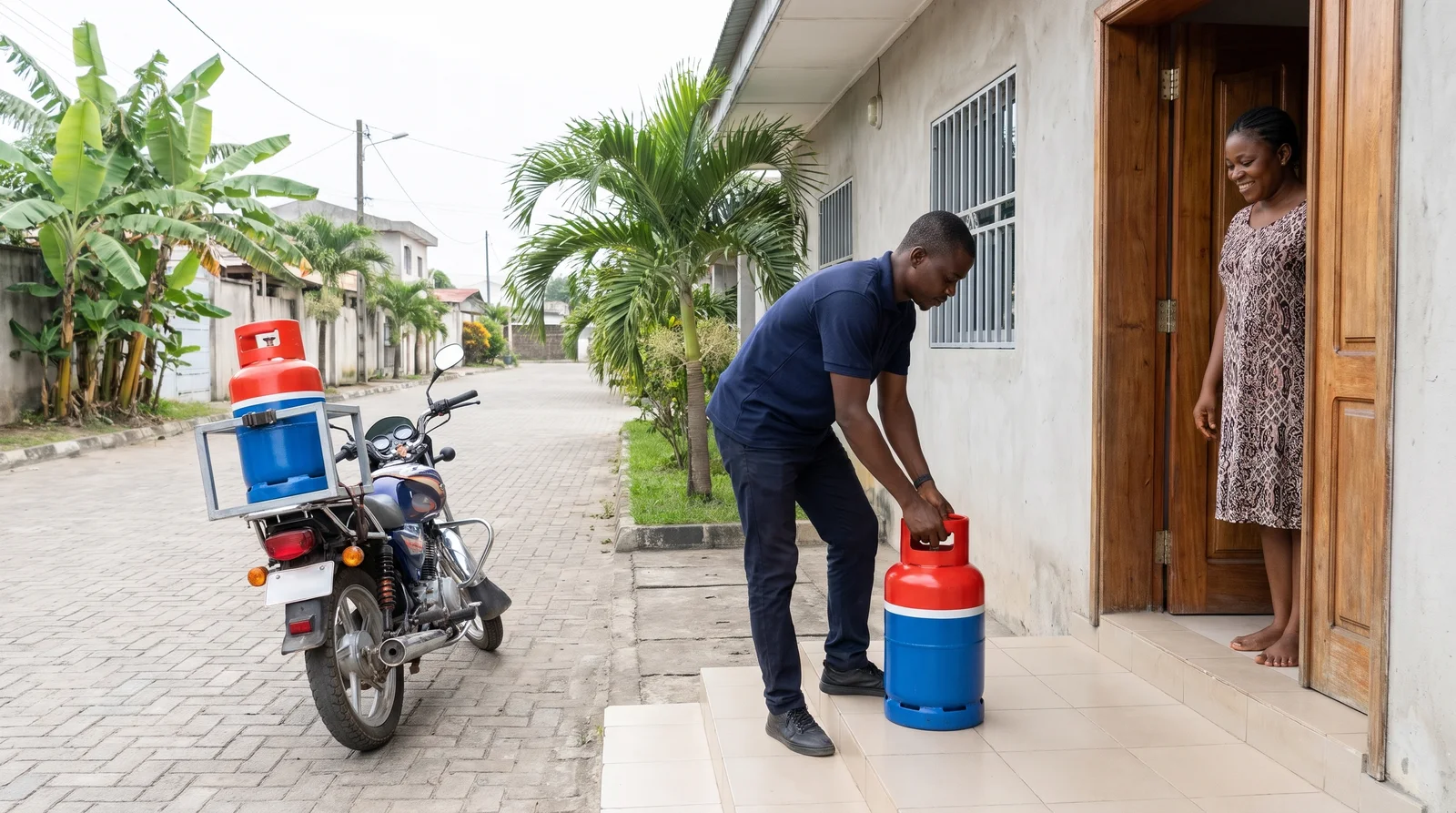 “Subsidise access, not consumption”: what Nigeria says about the refillAt the 16th NLCGA conference, in Abuja on 4 and 5 November 2026, Audrey Joe-Ezigbo (Falcon Corporation) proposed subsidising access to gas rather than its consumption, and judging every programme by one measure: does the household that was helped still refill its cylinder, on its own, 24 to 36 months after support ends. On 21 November, Anthony Agbo (Unigas) pointed out that 96% of Nigeria's LPG receipts in September came from domestic producers, with stock cover of 15.9 days against a 30-day minimum. In Cameroon, the press disagrees on the Bamenda gas filling centre, inaugurated on 9 May 2025. Everywhere, the missing figure is the refill at household level.
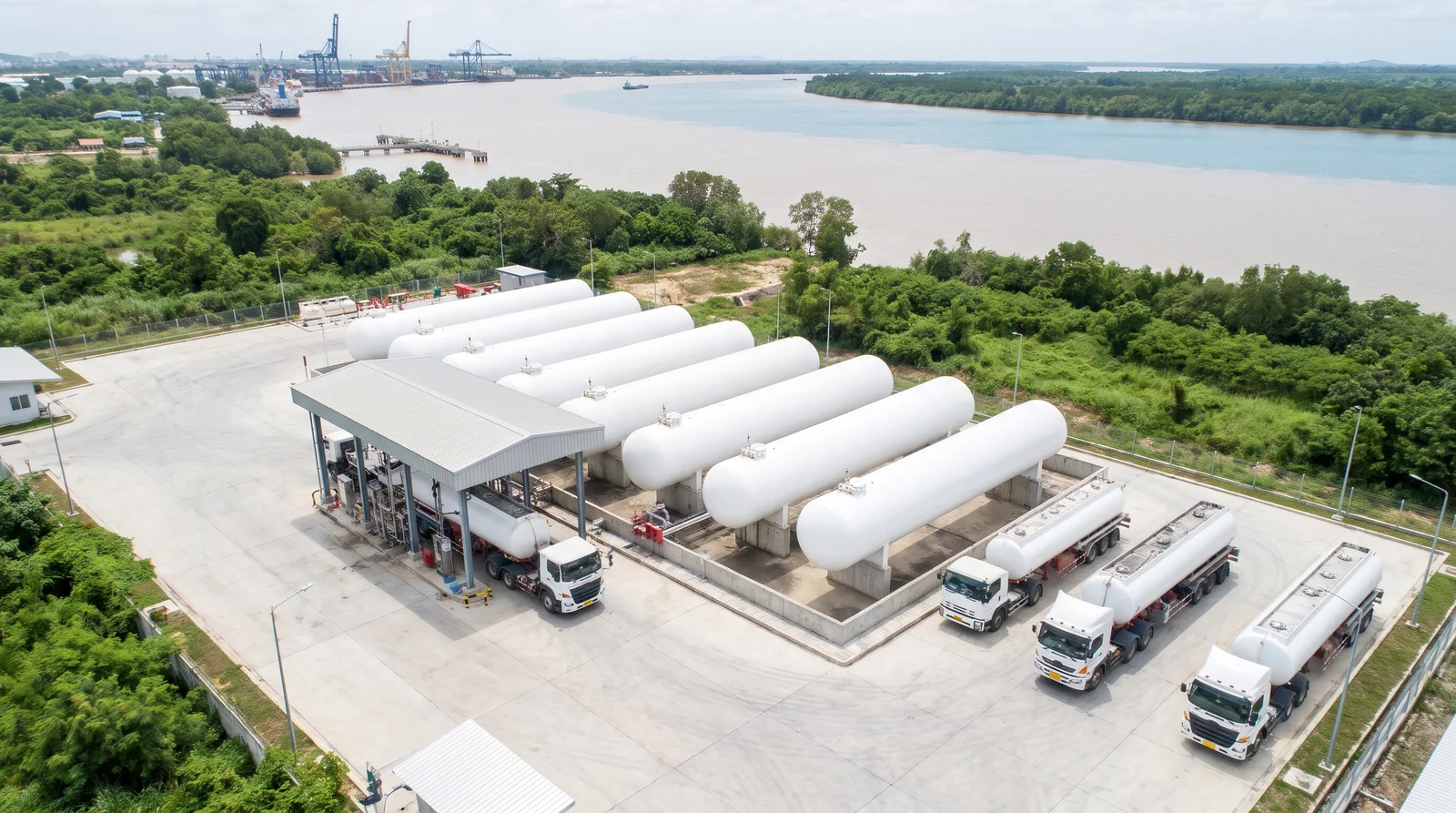 Bipaga at 200 tonnes, Bonabéri in thirty months: Cameroon's household gas between two supply chainsThe Bipaga plant, Cameroon's only local source of household gas, produced 200 tonnes of LPG in October 2026 according to data provided to Investir au Cameroun, against an average of 1,800 tonnes a month from May to September. On 11 November, SCDP held the kick-off meeting for the Bonabéri LPG hub, due to be operational in a little under thirty months, and on 12 November it called the foundation stone of the Kribi terminal imminent. Until then, the gas in Cameroon's kitchens arrives almost entirely by ship and goes through today's depots.